
Crawlspace Encapsulation in Decherd and Tullahoma, TN
What's Under Your Home Is Affecting Everything Above It
Crawlspace Encapsulation in Decherd and Tullahoma, TN — it's one of the most impactful services Prince Insulation provides, and one of the most misunderstood by property owners who've never had a reason to think about what's happening underneath their floors. Family-owned since 1980, we've crawled under thousands of homes across Middle Tennessee. The problems we find repeat themselves. So do the consequences of leaving them unaddressed.
Moisture migrates upward. What starts as a damp crawlspace becomes elevated indoor humidity, wood rot at the floor framing, mold in the subfloor, and energy performance that no amount of attic work will fully compensate for.
Call (931) 580-0088 for a free estimate.
Why Tennessee Crawlspaces Fail
The region's climate is the primary driver. Middle Tennessee sits in a humid subtropical zone — ground moisture is persistent, seasonal temperature swings are significant, and the pressure differential between the crawlspace and the living space above it pulls that moisture upward constantly.
Traditional open-vent crawlspace design assumed that outside air moving through vents would dry out the space. In humid climates, it does the opposite. Warm, humid exterior air enters the crawlspace, contacts the cooler surfaces of the floor framing, and deposits moisture. Consistently.
Crawl space repair starts with understanding that dynamic — and crawl space encapsulation is the solution that addresses it structurally rather than symptomatically.
What Crawlspace Encapsulation Actually Involves
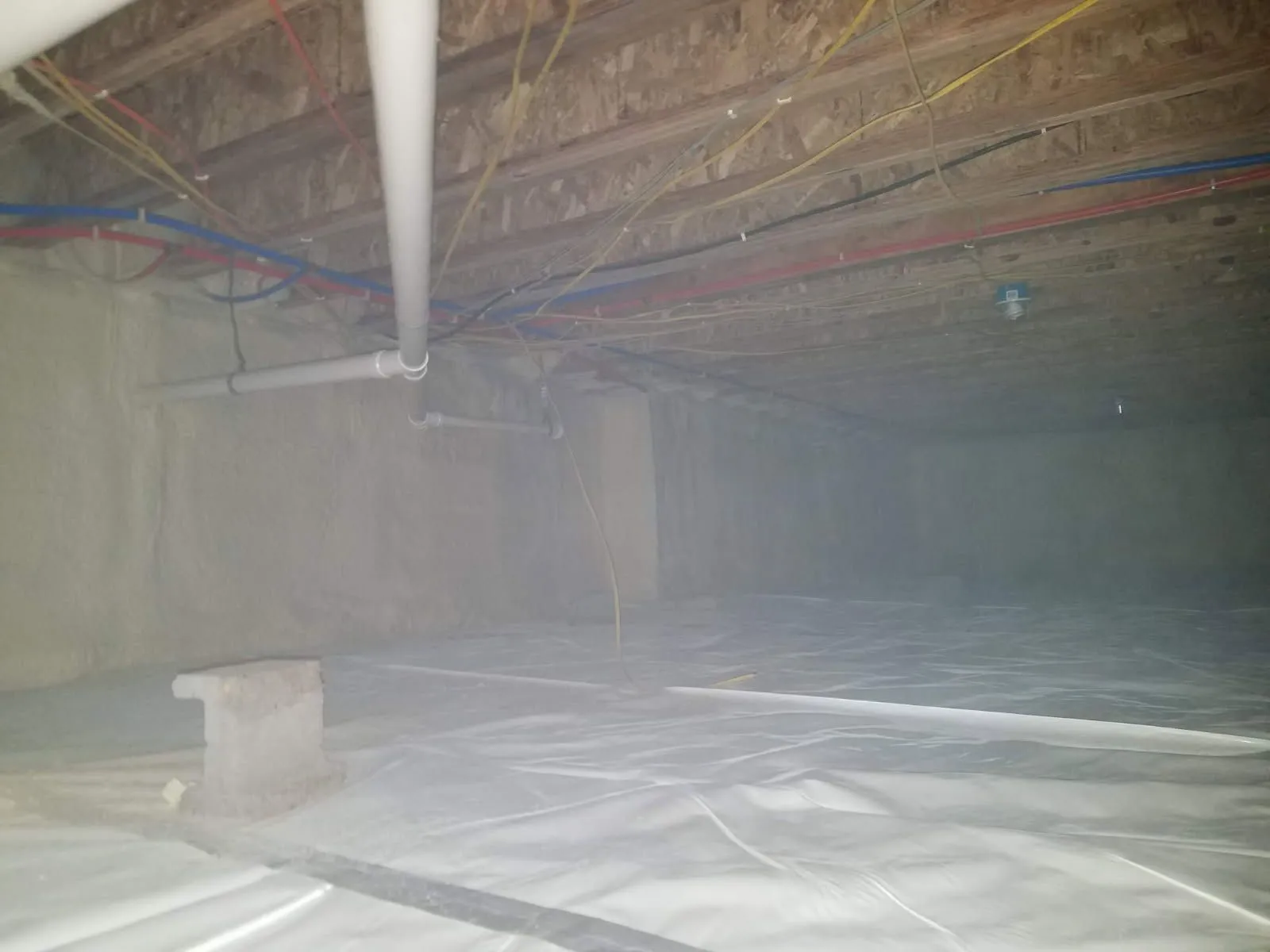
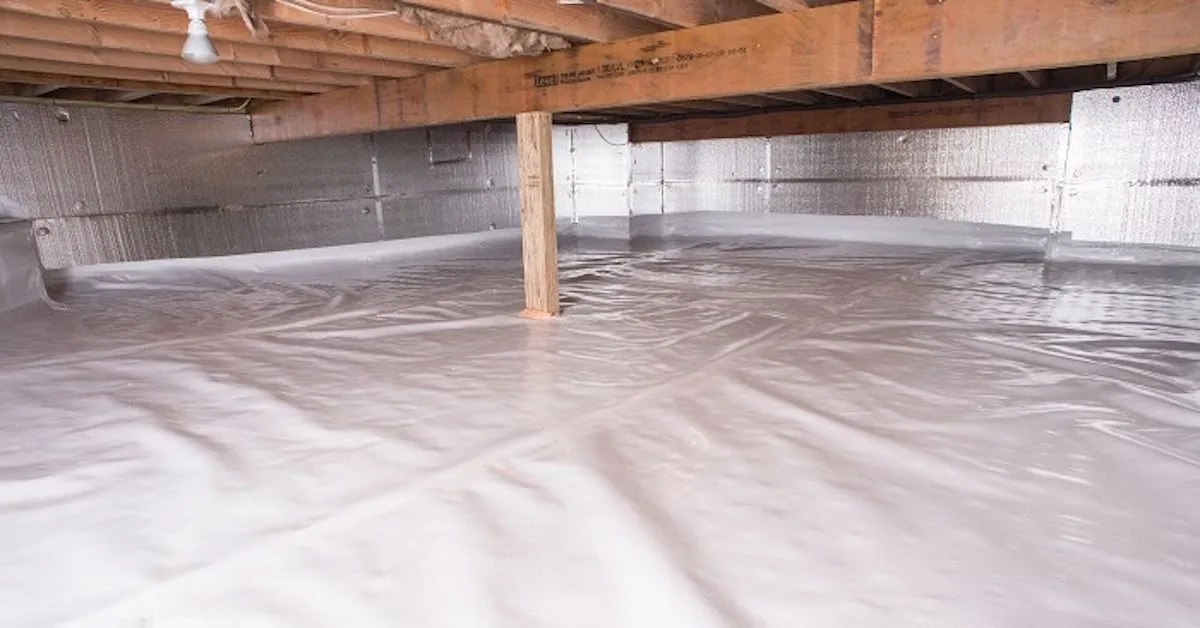
A fully encapsulated crawl space is a sealed, conditioned environment. Ground moisture is blocked. Air infiltration is controlled. The space becomes part of the building's thermal and moisture management system rather than its primary liability.
The process involves several coordinated steps, and this is usually where people run into problems — hiring contractors who do part of the job and call it complete. A vapor barrier alone without air sealing. Air sealing without addressing standing water. Each piece matters. The system only performs when it's complete.
Crawl Space Vapor Barrier and Moisture Barrier Installation
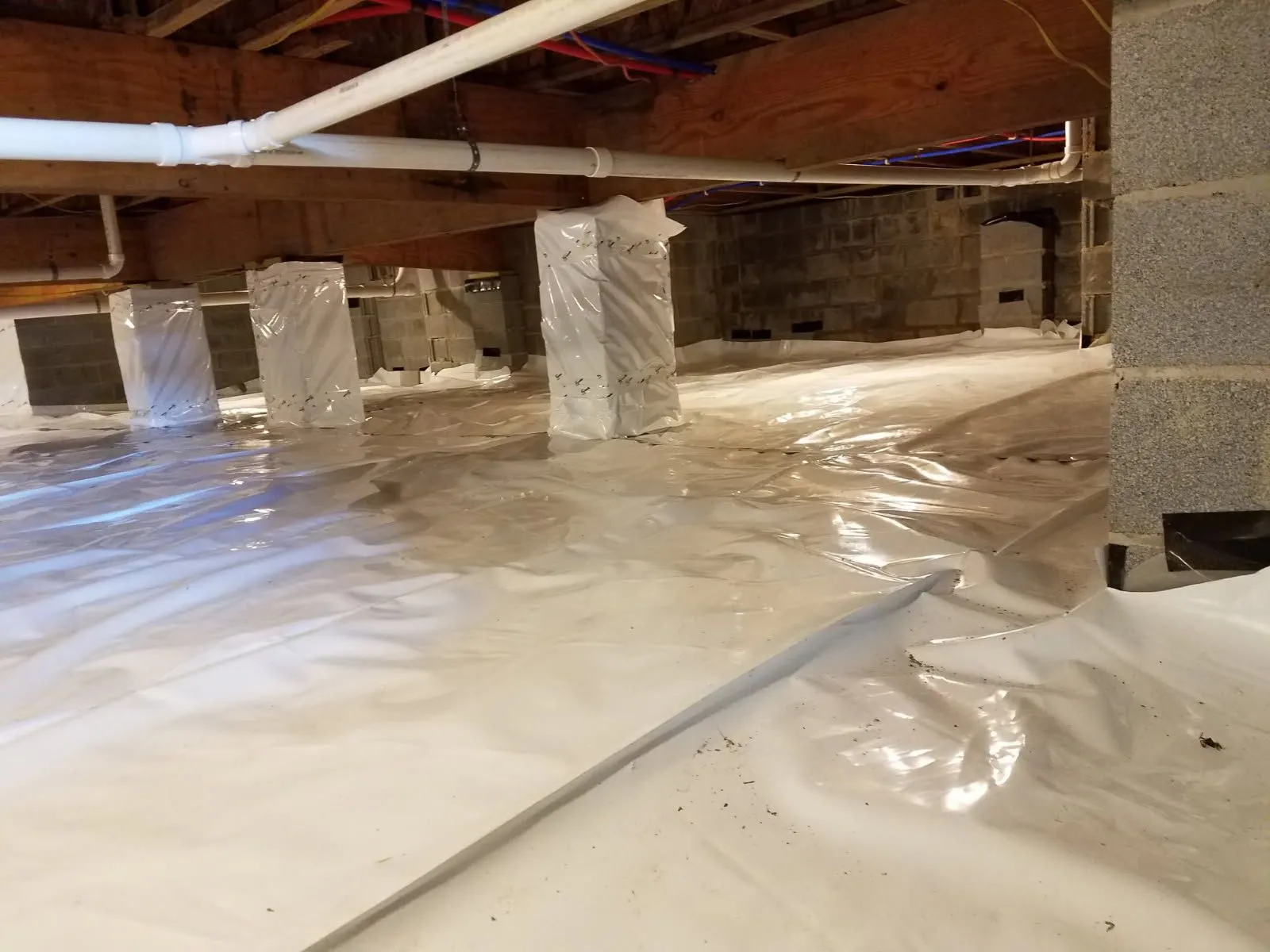
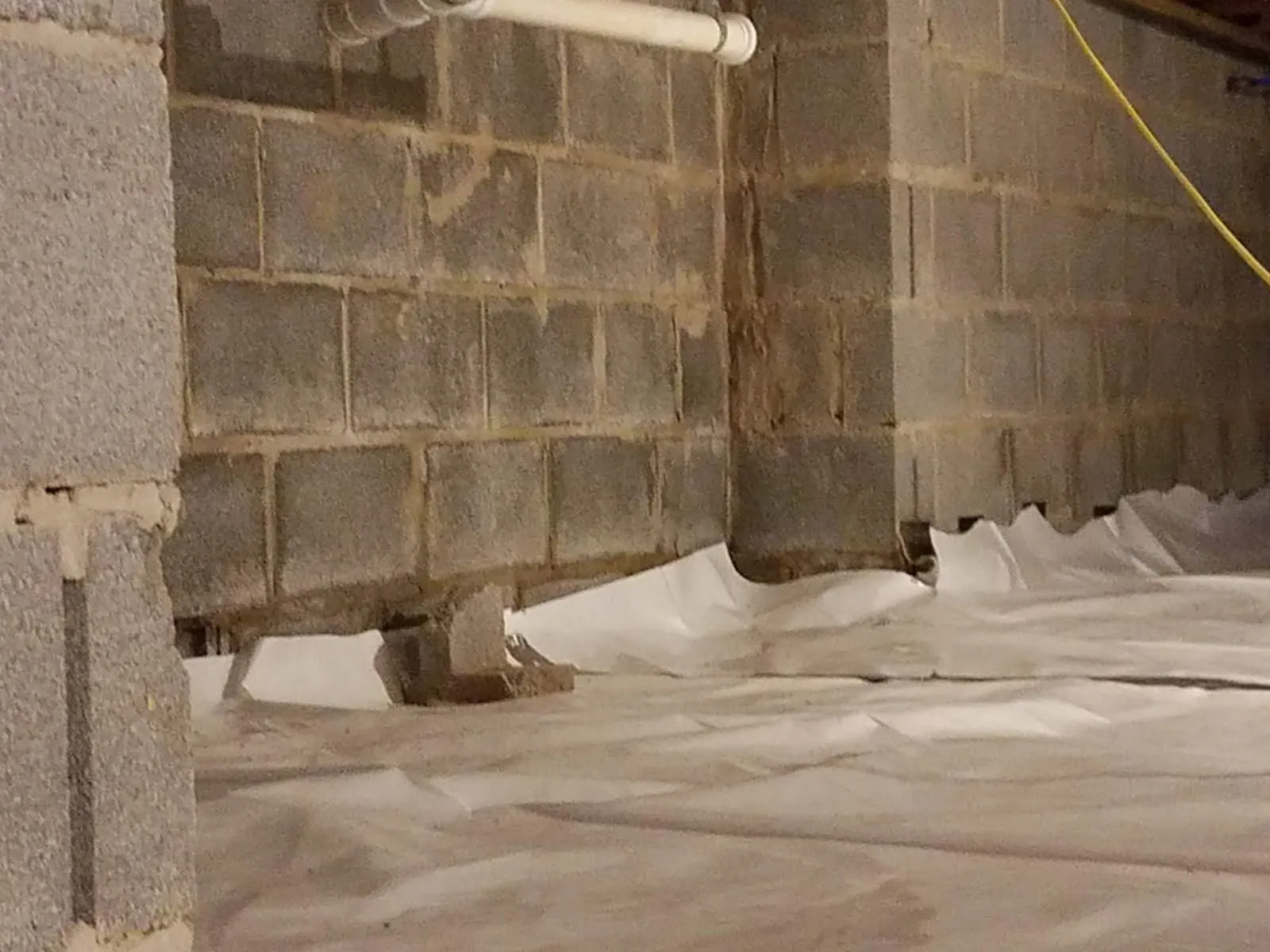
The foundation of any encapsulation project is a high-quality crawl space vapor barrier — a thick polyethylene liner that covers the ground surface and extends up the foundation walls, sealed at seams and terminations to prevent ground moisture from entering the space.
A proper crawl space moisture barrier isn't the thin sheeting sold at hardware stores. It's a reinforced, puncture-resistant liner rated for long-term ground contact, installed with overlapping seams and mechanically fastened to the foundation wall. The difference in material quality and installation method determines whether the barrier lasts two years or twenty.
Crawl Space Sealing
Crawl space sealing addresses the air infiltration points that a vapor barrier alone doesn't cover — foundation vents, pipe penetrations, gaps at the sill plate, and the crawlspace access door. Foam and mastic are used to close each pathway, converting the crawlspace from a vented to a conditioned or semi-conditioned configuration.
This step is frequently skipped or done partially. Most jobs fall apart because of timing, not the work itself — on encapsulation projects, they fall apart because air sealing gets treated as optional. It isn't.
Crawl Space Insulation
With the moisture and air infiltration addressed, crawl space insulation is installed at the foundation walls rather than the floor above. In an encapsulated crawlspace, insulating the walls is more effective than insulating the floor — it brings the crawlspace into the conditioned envelope, stabilizing temperatures and protecting plumbing from freeze exposure in winter.
Spray foam is the standard specification for foundation wall insulation in encapsulated crawlspaces. It adheres directly to the surface, provides both thermal resistance and air sealing in a single application, and doesn't require mechanical fastening.
Crawl Space Waterproofing
Properties with active water intrusion — seasonal flooding, hydrostatic pressure through the foundation wall, or surface water drainage issues — require crawl space waterproofing before encapsulation can be completed. A vapor barrier installed over standing or flowing water isn't an encapsulation. It's a problem deferred.
We assess water intrusion sources during the estimate and address them as part of the scope when present. Drainage corrections, sump installations, and wall crack repair are coordinated before the liner goes down.
What a Properly Encapsulated Crawlspace Delivers
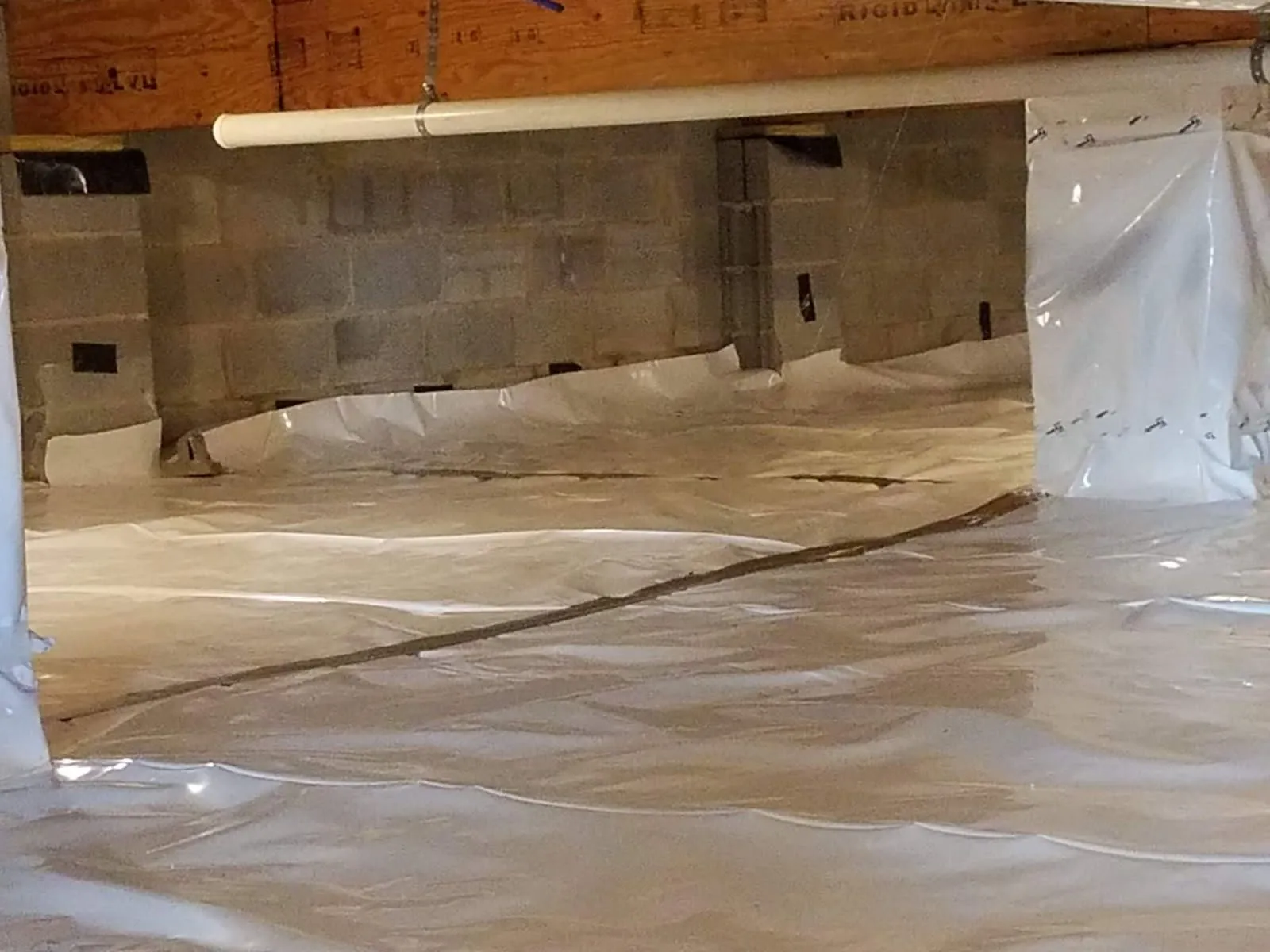
The performance improvements from a complete Crawlspace Encapsulation in Decherd and Tullahoma, TN project are measurable and consistent:
Lower indoor humidity. The crawlspace is no longer contributing moisture to the living space above it. Homeowners with persistent summer humidity issues frequently trace a significant portion of the problem to an unencapsulated crawlspace.
Improved floor comfort. Cold floors in winter are often a crawlspace problem. Bringing the space into the conditioned envelope eliminates the thermal bypass that makes first-floor rooms uncomfortable regardless of what the thermostat says.
Protected floor framing. Wood rot and mold in the subfloor and floor joists are direct results of sustained moisture exposure. Crawl space waterproofing and encapsulation stop that process and protect the structural integrity of the floor assembly.
Better HVAC performance. Ductwork and mechanical equipment located in an encapsulated crawlspace operates in a controlled environment rather than a humid, temperature-variable one. Efficiency improves. Equipment lifespan extends.
Finding Crawl Space Encapsulation Near Me
The search for crawl space encapsulation near me produces a wide range of results — some contractors who specialize in this work, some who offer it as an add-on to other trades, and some who sell a partial solution as a complete one.
Crawl space contractors who operate at volume in a specific region understand the local soil conditions, typical moisture sources, and foundation types that define what each project actually needs. Generic approaches applied to Tennessee's specific climate conditions produce generic results — which often means callbacks.
Prince Insulation has been providing crawl space services in this region for decades. We know the crawlspaces under Franklin and Coffee County homes. The clay soils, the seasonal water table behavior, the foundation construction common to different eras of building. That context shapes every recommendation we make.
Service Areas
Prince Insulation serves residential, commercial, and contractor clients throughout:
- Decherd, Tullahoma, Winchester, Manchester
- Fayetteville, Lynchburg, Estill Springs, Cowan
- Shelbyville, Monteagle, Sewanee, Jasper
- South Pittsburg, Whitwell, Morrison, Huntland, Beech Grove
Not sure if we cover your area? Call — (931) 580-0088. We likely do.
Frequently Asked Questions About Crawlspace Encapsulation
Start with a Free Assessment
Crawlspace Encapsulation in Decherd and Tullahoma, TN — done completely, by a crew that's been working under Tennessee homes since 1980. Prince Insulation brings the full scope: vapor barrier, air sealing, insulation, waterproofing when needed. No partial solutions presented as complete ones.
Call (931) 580-0088. Monday–Friday, 7AM–5PM. Free estimates, straight answers.
Request a Quote
Learn More About Prince Insulation
Serving Winchester, TN, Tullahoma, TN, Manchester, TN, Jasper, TN, and surrounding areas. Prince Insulation specializes in residential insulation and commercial insulation. Quick response times. Competitively priced. Free estimates. Call us today.
Get In Touch
(931) 580-0088
dewaynehill382@gmail.com
187 Hill-Coulson Rd, Decherd, TN 37324, United States