
Vapor Barriers in Decherd and Tullahoma, TN
Moisture Doesn't Announce Itself. Until It's Already a Problem
Vapor Barriers in Decherd and Tullahoma, TN — Prince Insulation has been installing them correctly across Middle Tennessee since 1980. What looks like a humidity problem, a musty odor, or soft flooring is frequently a moisture problem that started below the structure and worked its way up. Family-owned for over four decades, we've seen what happens when vapor barriers are installed poorly, installed partially, or skipped entirely.
The consequences aren't dramatic at first. They're quiet. And by the time they're visible, the damage is already done.
Call (931) 580-0088 for a free estimate.
What Vapor Barriers Actually Do
Ground moisture is constant. Soil holds water, releases it as vapor, and that vapor migrates upward through pressure differential into whatever space sits above it — a crawlspace, a basement slab, a concrete floor in a commercial building. Left unblocked, it raises humidity, degrades materials, and creates the conditions that mold requires to establish itself.
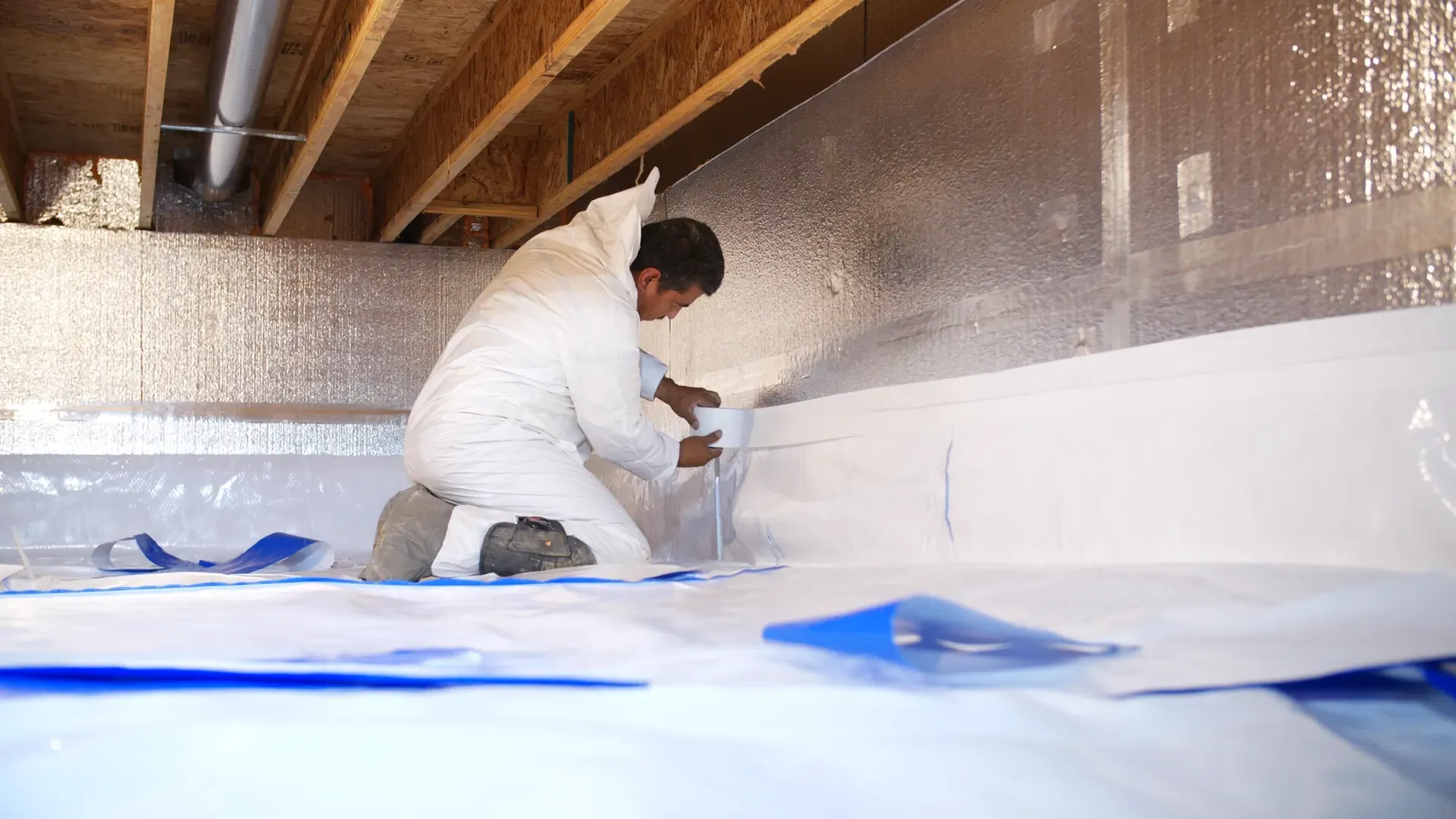
Vapor barriers interrupt that migration path. A properly installed liner — sealed at seams, fastened at the foundation wall, extended across the full ground surface — creates a physical boundary between the soil and the structure above it. The moisture stays in the ground. The building stays dry.
Simple concept. The execution is where most installations fall short.
Our Vapor Barrier Services
Crawl Space Vapor Barrier Installation
Crawl space vapor barrier installation is the most common application we handle, and the one where installation quality varies most dramatically between contractors. The material matters — liner thickness, puncture resistance, and long-term durability under ground contact conditions all determine whether the barrier performs for years or fails within a single season.
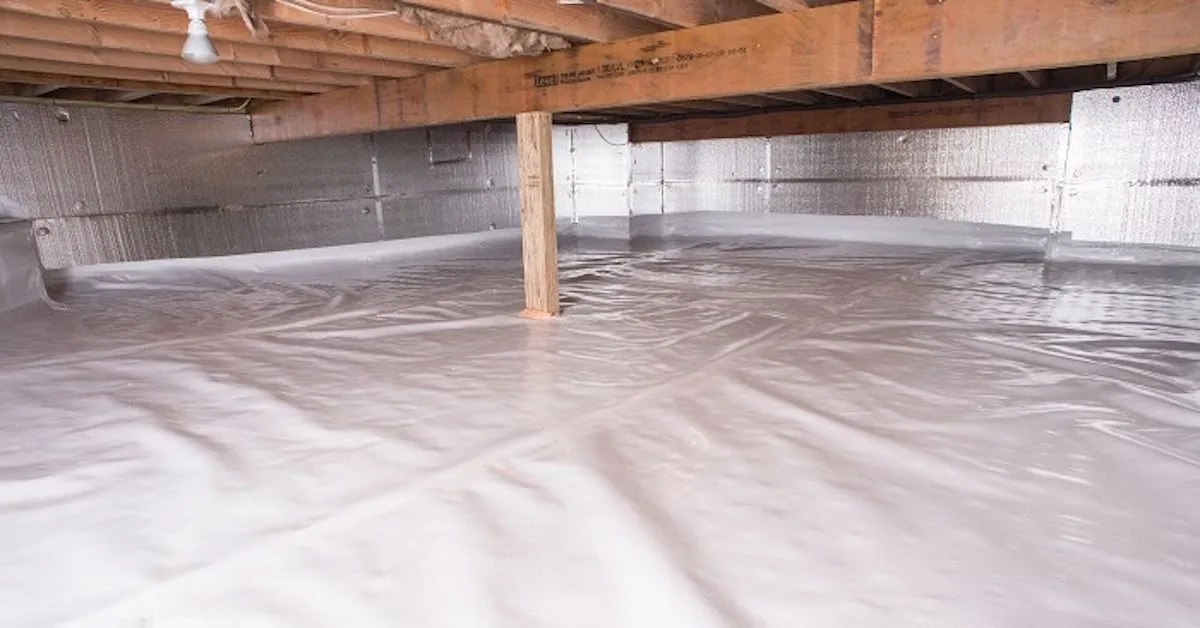
A proper crawl space vapor barrier covers the entire ground surface, overlaps seams by a minimum of twelve inches with taped or sealed joints, extends up foundation walls, and is mechanically fastened at the termination. No gaps at columns or piers. No areas where the liner stops short of the perimeter.
This is usually where people run into problems — a barrier that covers most of the floor but leaves the perimeter exposed, or one that's laid flat without being secured, which allows moisture to migrate under the edges exactly where the soil conditions are typically worst.
Basement Crawl Space Vapor Barrier
Properties with partial or full basements present a variation on the same challenge. A basement crawl space vapor barrier addresses moisture intrusion through the floor slab and lower wall surfaces — surfaces that are in direct contact with soil and subject to hydrostatic pressure during wet seasons.
In partially finished basements, liner installation at the floor level prevents ground vapor from affecting stored materials, framing, and finished surfaces above. In unfinished mechanical spaces, it protects equipment, ductwork, and structural components from the sustained moisture exposure that accelerates corrosion and degradation.
Concrete Vapor Barrier
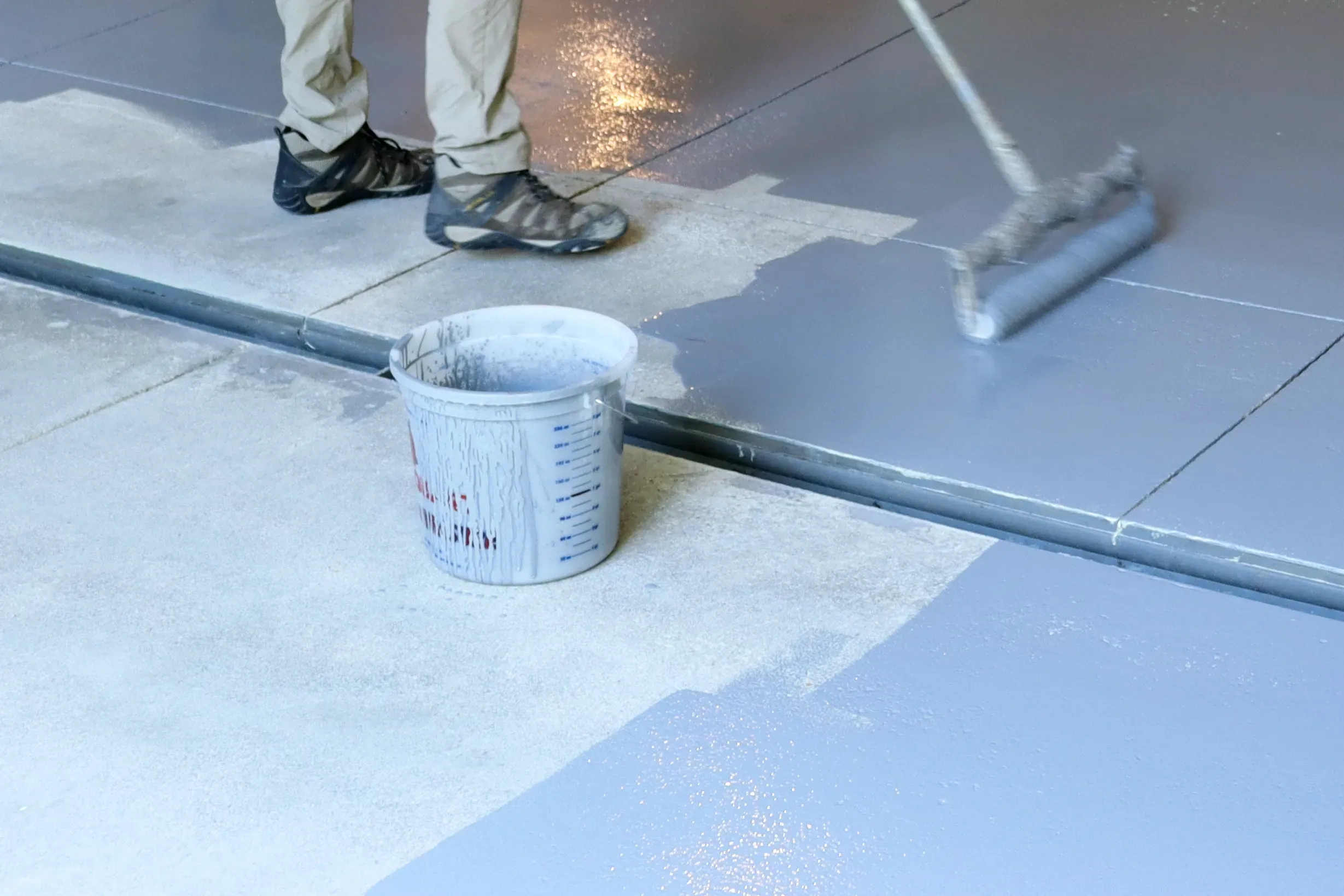
Concrete is porous. Slabs that appear dry on the surface can transmit significant vapor through their thickness, which affects flooring adhesives, floor coverings, coatings, and the air quality of the space above. A concrete vapor barrier — installed beneath new slabs during construction or as a surface treatment in existing structures — blocks that transmission path.
For new construction, we coordinate barrier installation with the build schedule before the pour. For existing slabs, we assess the moisture transmission rate and recommend the appropriate product and installation method for the specific application.
Vapor Barrier Insulation Assemblies
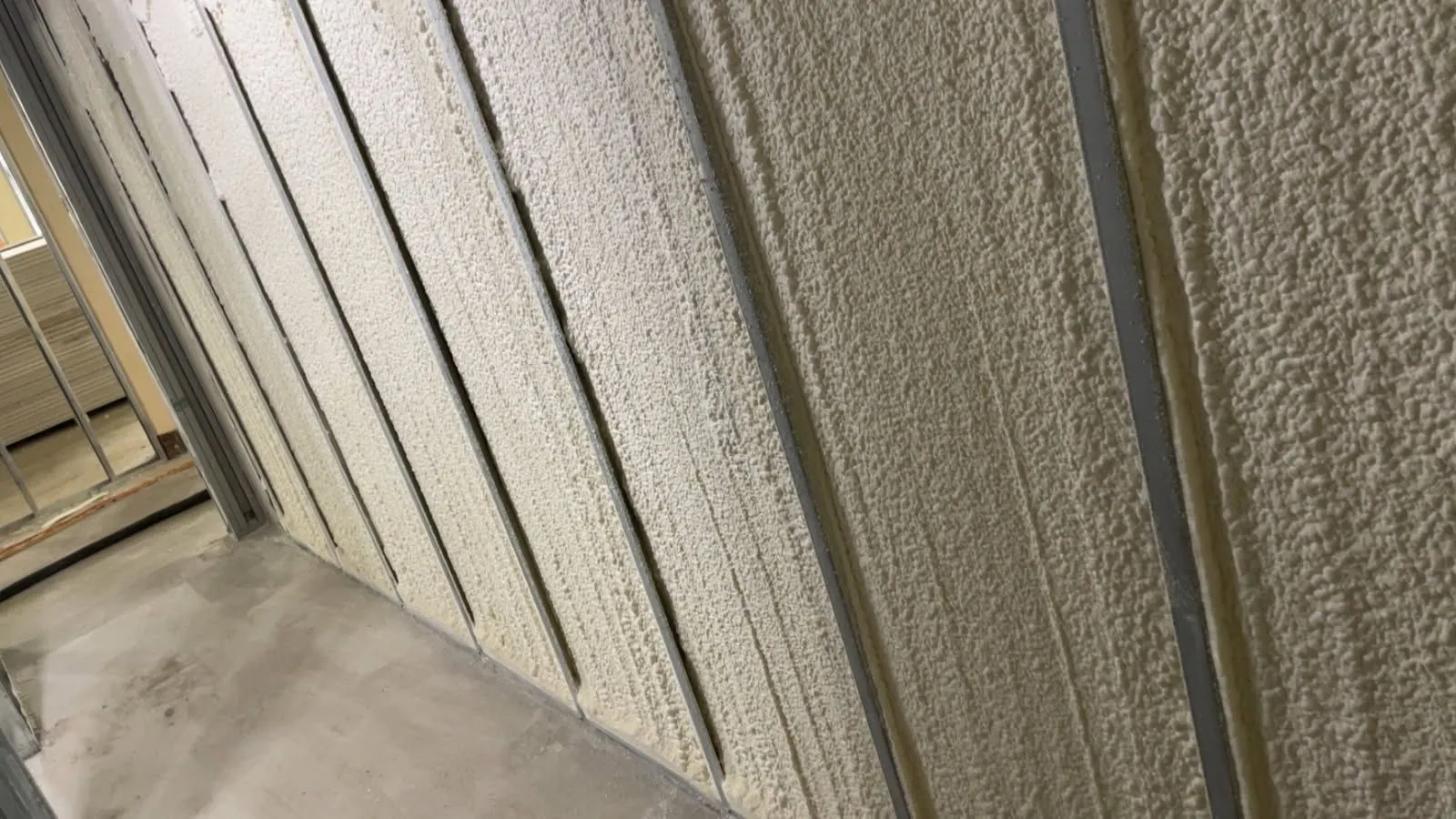
In many applications, vapor barrier insulation combines moisture control with thermal resistance in a single installation — particularly at foundation walls in encapsulation crawlspace projects. Closed cell spray foam applied to the foundation wall functions as both an air and vapor barrier and provides meaningful R-value, eliminating the need for separate liner and insulation installations at the wall plane.
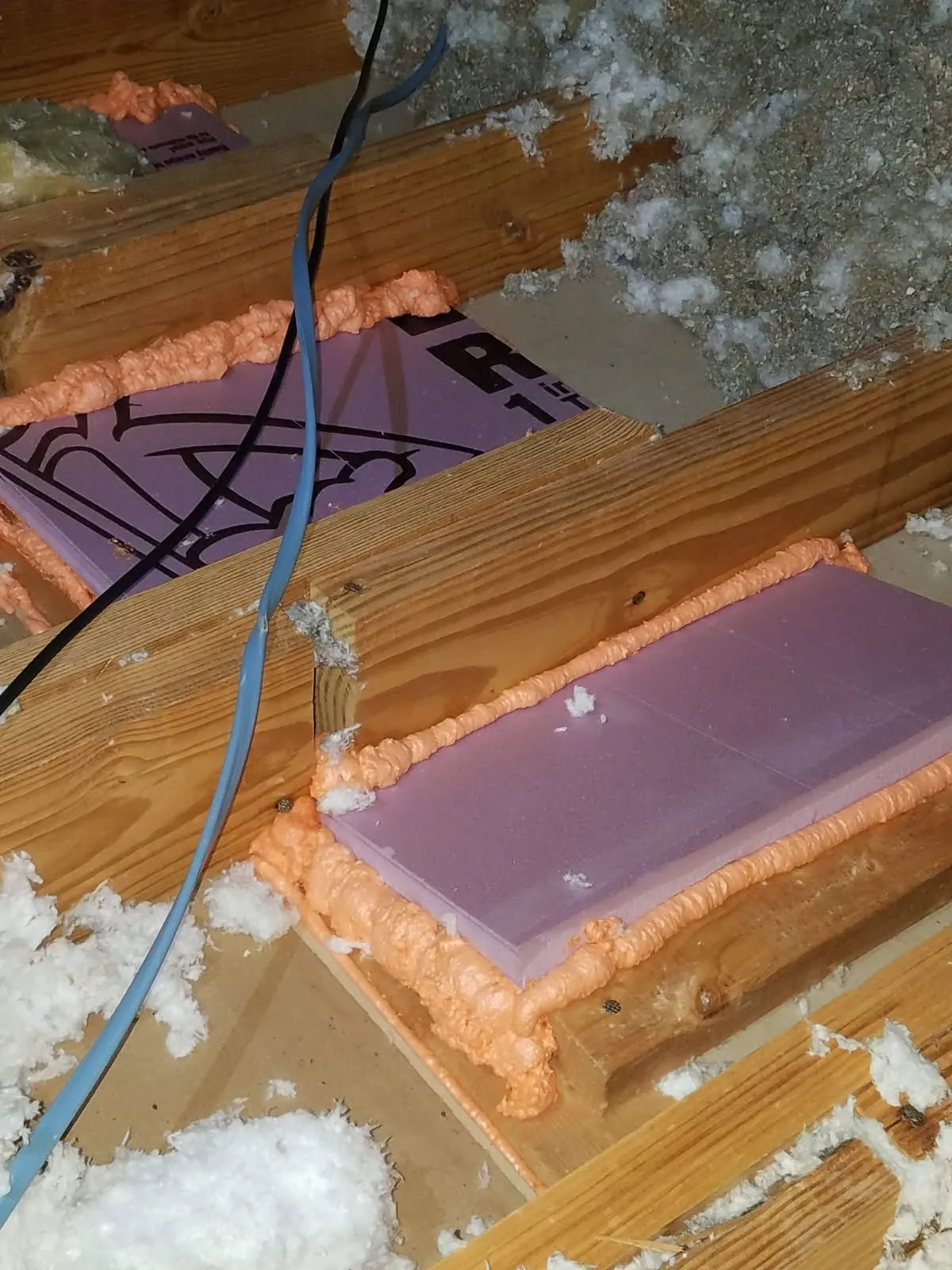
For floor assemblies above crawlspaces, vapor control and insulation are coordinated to ensure that moisture management and thermal performance work together rather than against each other. The specification depends on whether the crawlspace is vented or conditioned — a distinction that affects everything downstream.
Understanding the Products: Membrane, Retarder, and Seal
Vapor Membrane
A vapor membrane is the broader category — any sheet material designed to restrict vapor transmission. Within that category, products are rated by permeability, with lower perm ratings indicating greater resistance to vapor movement. The right perm rating depends on the application, the climate zone, and the assembly it's part of.
Vapor Retarder Crawl Space
A vapor retarder crawl space liner is classified by perm rating — Class I (0.1 perms or less), Class II (0.1 to 1.0 perms), or Class III (1.0 to 10 perms). For ground contact applications in Tennessee's humid climate, Class I liners are standard. Most jobs fall apart because of timing, not the work itself — on vapor barrier projects, they fall apart because the wrong perm class gets installed for the climate conditions.
Vapor Seal Crawl Space
A vapor seal crawl space goes beyond liner installation to include the sealing of all penetrations, seams, and terminations — creating a continuous, uninterrupted barrier rather than a liner with gaps at every pipe, column, and wall junction. Sealing is the step most installations skip. It's also the step that determines whether the system actually performs.
Moisture Barrier for Crawl Space
The terms moisture barrier for crawl space and vapor barrier are often used interchangeably, though technically a moisture barrier addresses liquid water while a vapor barrier addresses vapor transmission. In most crawlspace applications, both functions are required — which is why product selection and installation method both matter.
Moisture Vapor Barrier
A moisture vapor barrier — one that addresses both liquid infiltration and vapor transmission — is the specification Prince Insulation uses as a default for ground contact applications in this region. Tennessee soil conditions and the seasonal water table behavior in Franklin and Coffee Counties make comprehensive protection the practical standard, not an upgrade.
Searching for Vapor Barriers Near Me?
The search for Vapor Barriers near me returns contractors with widely varying levels of experience with moisture management specifically. General insulation contractors, waterproofing companies, and crawlspace specialists all appear — and they bring different approaches, different products, and very different execution standards.
Questions worth asking: Do they assess the full assembly — ground, walls, penetrations — or do they quote liner only? Do they use commercial-grade material, or the thin sheeting available at supply houses? Is the crew in-house, or are they subcontracting the installation to labor that isn't accountable to them afterward?
Prince Insulation has been the answer to Vapor Barriers near me for Franklin County and surrounding areas for over four decades. The crew is ours. The materials are specified for this climate. The installations are done completely.
Service Areas
We serve homeowners, builders, and commercial clients throughout:
- Decherd, Tullahoma, Winchester, Manchester
- Fayetteville, Lynchburg, Estill Springs, Cowan
- Shelbyville, Monteagle, Sewanee, Jasper
- South Pittsburg, Whitwell, Morrison, Huntland
Coverage extends beyond this list — call (931) 580-0088 if your location isn't here.
Frequently Asked Questions About Vapor Barriers
Get the Assessment. Get It Done Right
Vapor Barriers in Decherd and Tullahoma, TN — installed completely, by a crew that's been managing moisture in Tennessee structures since 1980. Prince Insulation. Free estimates, commercial-grade materials, in-house technicians who know this region.
Call (931) 580-0088. Monday–Friday, 7AM–5PM.
Request a Quote
Learn More About Prince Insulation
Serving Winchester, TN, Tullahoma, TN, Manchester, TN, Jasper, TN, and surrounding areas. Prince Insulation specializes in residential insulation and commercial insulation. Quick response times. Competitively priced. Free estimates. Call us today.
Get In Touch
(931) 580-0088
dewaynehill382@gmail.com
187 Hill-Coulson Rd, Decherd, TN 37324, United States